The Long Game: Strength Training After 40 Needs Different Rules
Your joints have stories to tell. Strength training after 40 is not about less — it is about smarter. Conservative progression, joint-friendly choices, sustainable gains.
The oak does not apologize for growing slowly
There is a particular kind of arrogance in modern fitness culture. It tells you that training should look the same at forty-five as it did at twenty-two. That if you are not grinding through pain, you are soft. That slowing down is surrender.
It is not. It is wisdom.
I have trained athletes on both sides of forty, and I will tell you something the influencers will not: the rules change. Not the ambition. Not the fire. The rules. And the lifters who refuse to accept this are the ones I see disappear from the gym entirely by fifty, broken and bitter.
You do not have to be one of them.
Your joints have earned a different language
A twenty-year-old shoulder does not carry the same story as a forty-year-old shoulder. Decades of work, sport, poor posture, old injuries — these things accumulate like rings inside a tree. They are not weaknesses. They are history. But you have to respect that history when you choose how to load the body.
The trap bar deadlift: Pull from a neutral grip instead of forcing your shoulders into internal rotation with a straight bar. The same muscles fire. The same strength builds. But the spine stays happier, the hips stay open, and you can train this lift for the next thirty years.
The Swiss bar bench press: A neutral or angled grip takes the strain off the anterior shoulder capsule. I have seen lifters who could not flat bench without pain press heavy and pain-free within weeks of switching.
Landmine presses instead of strict overhead: The arc of a landmine press is gentler on the shoulder joint than a barbell locked out directly overhead. You still build pressing power. You still build shoulders like boulders. But you do it without waking up at 3 AM with a throbbing rotator cuff.
These are not “easy” alternatives. They are intelligent ones. A river does not fight the mountain — it finds the path around it and carves a canyon over time.
The weight of patience
Here is where ego has to leave the room.
At twenty-five, you can throw 2.5 kilograms on the bar every session and ride that wave for months. At forty-five, that same approach will grind your tendons into dust within weeks.
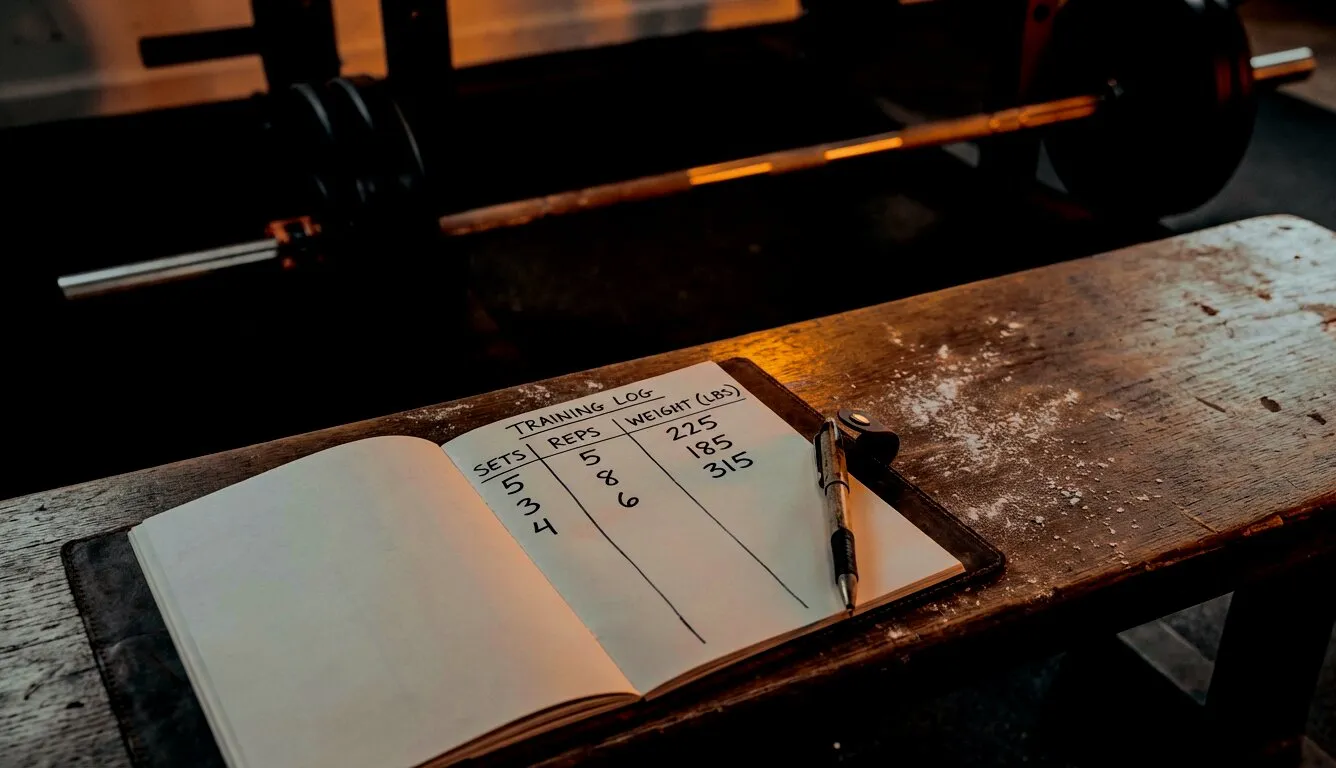
Conservative progression: Add 1.25 kilograms per session. Buy the fractional plates. They are not a sign of weakness — they are the smartest investment in the gym. Over twelve weeks, that is still 15 kilograms added to your lift. Over a year, it is a transformation. But it happens without the inflammatory cascade that sends you to a physiotherapist every other month.
This is the same progression logic we built into the SteelRep Protocol. Small, deliberate steps. The algorithm does not care about your ego. It cares about your joints, your tendons, and whether you will still be lifting a decade from now.
The strongest oak in the forest did not get there by trying to grow an entire branch overnight.
Earn the right to work
I watch younger lifters walk into the gym, load the bar, and start pressing within three minutes. At twenty, you can get away with it. At forty, it is a fast track to injury.
Extended warm-ups are not optional: Ten to fifteen minutes of specific preparation before your working sets. Not a casual stroll on the treadmill — targeted movement that wakes up the joints you are about to load.
For a squat session, that means goblet squats, hip circles, ankle mobility work, and a few light sets that let the synovial fluid do its job. For pressing, it means band pull-aparts, shoulder circles, light rotator cuff work, and a progressive ramp to your working weight.
Think of it as sharpening the blade before the cut. A dull axe requires twice the force and causes twice the damage.
Recovery is the program
This is the part that challenges the modern fitness mind more than anything else. We have been taught that rest is laziness. That “the grind never stops.” That recovery is for the weak.
It is not. Recovery is where the strength is actually built.
Sleep is not negotiable: Eight hours. Your growth hormone peaks during deep sleep. Your tendons repair. Your nervous system resets. No supplement on earth replaces this.
Deload weeks are strategic, not soft: Every fourth or fifth week, drop the intensity by 30 to 40 percent. Let the accumulated fatigue dissipate. Let the body catch up to the demands you have placed on it. When you return, you will be sharper and stronger than when you left.
Mobility work is part of the session: Not something you do when you “have time.” It is written into the program with the same importance as the squat. Five to ten minutes of targeted stretching and soft tissue work after every session keeps you moving well and keeps the small injuries from becoming large ones.
At this stage of life, you are not just training the muscle. You are maintaining the entire system — the joints, the connective tissue, the nervous system, the spirit. A well-maintained machine runs for decades. A neglected one breaks down in the cold.
The decades ahead
I do not write this for people who want a quick fix. I write this for the lifters who understand that they are playing a longer game than most people can imagine.
You are not in decline. You are in a different season. The Swedish have a saying — lagom ar bast — just the right amount is best. Not less. Not more. Exactly what is needed.
Train with intelligence. Choose the movements that respect your history. Progress with patience. Recover with discipline. And understand that the Joint-Friendly Strength program exists precisely because this population deserves programming built for their reality, not recycled from a twenty-year-old athlete’s template.
You have decades of strength ahead of you. Not behind you. But only if you are willing to play the long game.
The iron will wait for you. It always does.